Thursday, August 14, 2014

Perseids vs The Supermoon


My goal was to capture a meteor in the same frame
with the nearly full super moon.
My automated Canon 1100D camera took 
nearly 800 15 second exposures beginning at
 about 1:00 AM along with this fireball at 
3:16 AM  on the 13th of August. 

On the very next frame, the trail of ash left by the 
fireball is back-lit by the nearly full moon.


Enhanced version shows the ash trail better.


This meteor occurred at 2:44 AM. I was recording 
the radio echos at the time. The following audio starts 
at 2:44:00 AM and runs 2.5 minutes. At 2:44:16, is 
a strong echo coinciding roughly with the above image.
 It's interesting that there is a flurry of echos beginning 
shortly after this at 2:45:14
.


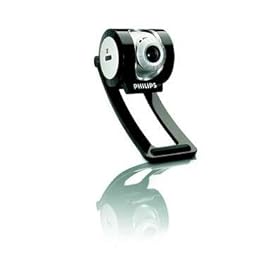
 I use the antenna in the picture to record
radio echos from meteor trails.


And finally, the time lapse of 400 frames starting around
3:10 AM. There a several fainter meteors as well.


Tuesday, December 11, 2012

Solargraphy Results

I have begun collecting and processing my 6 months solar graphs. Here are a few of the best out of about 12 or so I'd strewn about the area
Ventura, CA looking west over the Pacific Ocean.
Snapshot...
6 Month Exposure.

Ventura, CA looking east over the Pacific.
 Snapshot.
6 Months Exposure.

Mount Pinos Area

Approximate Google Street View

6 Months Exposure.
My Back Yard


Wednesday, June 20, 2012

Solargraphy Project

     Solargraphy is the practice of taking extremely long exposures of the sky, up to six months or longer! I've been collecting the supplies for several months now and began placing my cameras the day before the summer solstice. I plan on collecting them on or around the winter solstice after approximately six months exposure.
    I set my first 3 pinhole cameras in Ventura, CA:

#1) Behind City Hall. Probably the most likely to be found by someone.
Lat N 34° 17' 0.2"
Lon W 119° 17' 35.3"

Facing 140° (SE)

#2) Along highway 1 just north of the city.
Lat N 34° 17' 51.8"
Lon W 119° 20' 33.7"

Facing 265° (West)
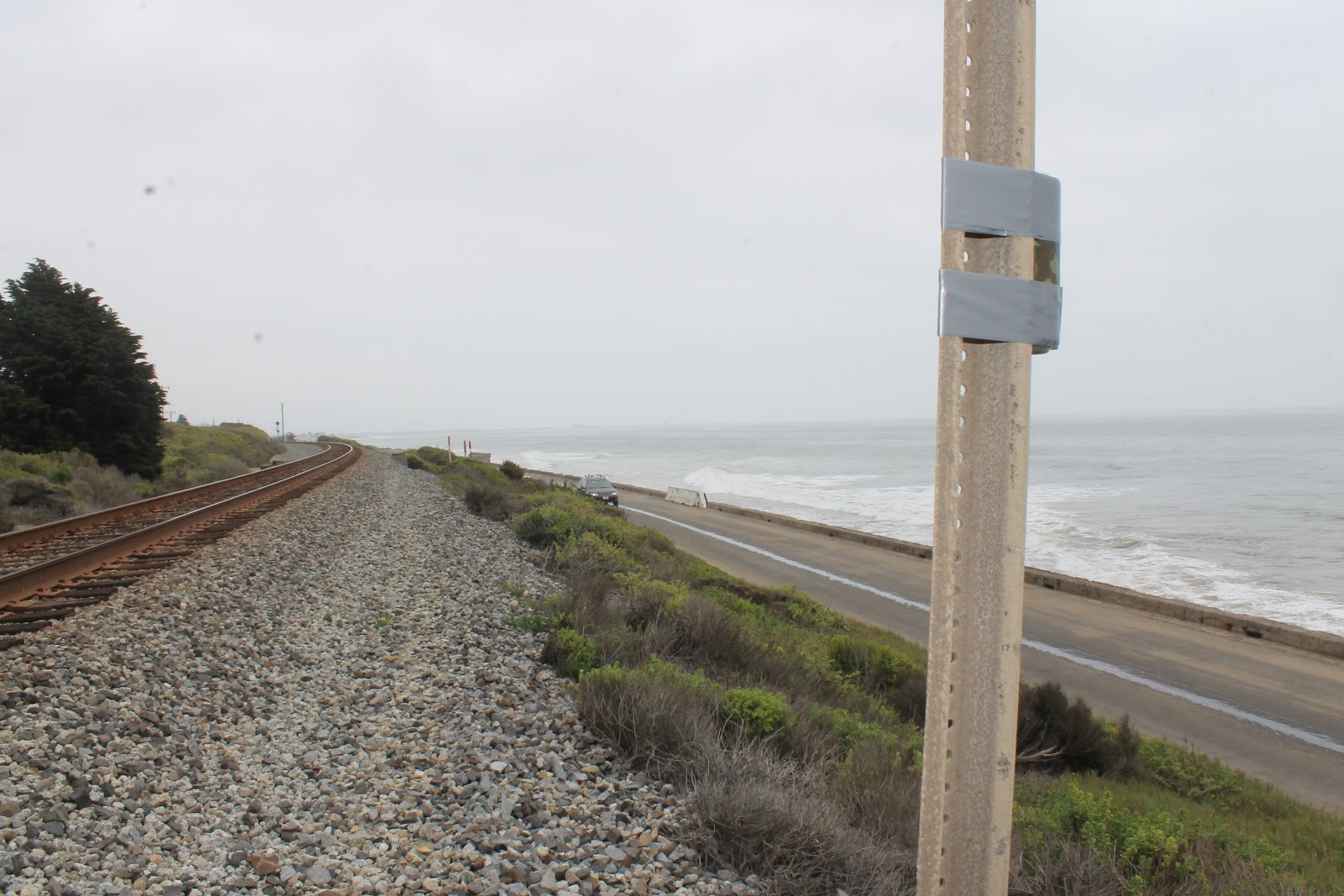
#3) Just south of #2 along the railroad tracks.
Lat N 34°17' 20.0"
Lon W 119° 20' 13.0 "

YIKES!!!

Facing 169° (SE)


Monday, December 6, 2010

It took several tries, but we finally got some Triops hatchlings. This video show the first one! Right around top-center. Tiny!

Sunday, November 7, 2010

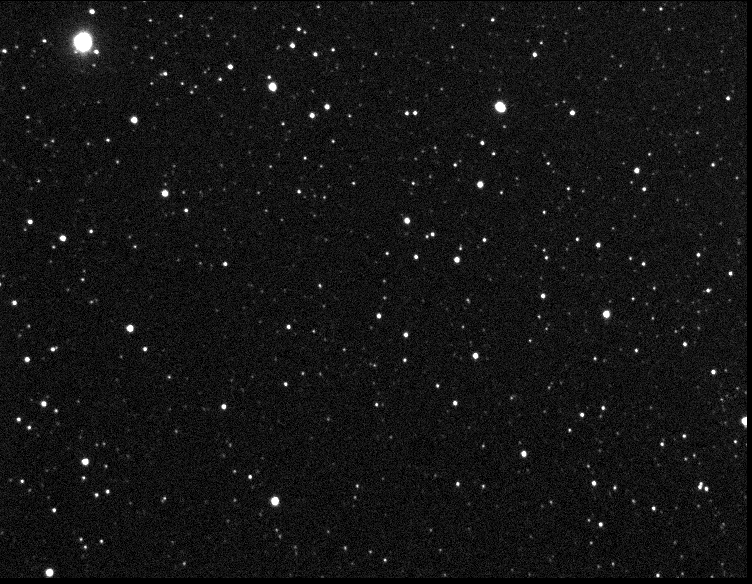
Find The Asteroid


Near Earth Asteroid "Epona". See if you can find it.
You may need to click the image...

Thursday, November 4, 2010

Creature Update

We have no creatures. I've tried two batches of eggs and nothing has hatched yet. I still have a few more to try. Not giving up yet!

Wednesday, October 27, 2010

Triops

Here at The Hollar Observer, we don't just observe the universe through a telescope. We observe everything. Today our Triops eggs arrived. Triops are a type of shrimp dating back millions of years before even the dinosaurs. The eggs arrived in "suspended animation" and can remain this way for over 25 years. Oddly, their lifespan is just a few weeks to a couple months but can grow to 3 inches in that short time. The package claimed to contain 30 to 50 eggs, but I counted over 70. So follow as we hatch and grow these ancient creatures.
As Jupiter passed opposition this year, I was able to get a good night of images. It took another couple weeks until I could find the several hours it took to process and create this animation. It's about three hours compressed into 3 seconds. The Great Red Spot is easily visible.

Click on the image to see the animation.

Tuesday, June 22, 2010

New CCD (1 Ceres)


I've traded in my color camera for a mono CCD for higher resolution and easier processing.

It seems to be very sensitive! As it's first test, I decided to image asteroid 1 Ceres. It just passed opposition in June and, thus is very bright at about magnitude 7.
As its number implies, Ceres was the first Minor Planet or Asteroid to be discovered. It was discovered by G Piazzi at Palermo in Sicily being first seen by him on 1 January 1801.

Ceres has a diameter of 932.6 km and is easily the largest inner asteroid, although recently a number of larger Kuiper belt objects have been discovered. At its 2006 meeting in Prague, the IAU voted that Ceres should be one of the group of "Dwarf Planets". It is the only asteroid that is large enough to be pulled into a spherical shape by its gravity.

Ceres's orbital period is 4.60 years, its distance from the Sun varying between 2.55 and 2.98 AU. The orbit is inclined at 10.6° to the ecliptic.

I'm quite please with the new CCD and even from my suburban skies, am getting down beyond mag 18. I don't know how dim I can go yet as none of my software shows stars dimmer than that. I need to download the 80GB data set and that should take a while.

(source here)

Sunday, January 24, 2010


Mars is approaching opposition meaning it is in the opposite side of the sky from the sun and the closest it will be to Earth this year. It's not a very good opposition this time due to Mars being in an elliptical orbit.

This was my first attempt with my 8" telescope. I was hoping for more detail, but it turned out I was looking at a fairly 'blank' side of Mars. You can easily see the polar cap made up of mostly frozen carbon dioxide.


UPDATE:
We had another clear night (Feb 11, 2010)) and I was able to get a shot in before yet more high clouds rolled in. This time it was a little underexposed and if I'd had more time would have taken some spectacular images. But this was the best I could manage this time.


Compare it to the CalSky model of what it should have looked like.

Friday, January 22, 2010

There's a webcam orbiting Mars!


The European Space Agency has a probe orbiting Mars called The Mars Express. It's job is to:
  • image the entire surface at high resolution (10 metres/pixel) and selected areas at super resolution (2 metres/pixel);
  • produce a map of the mineral composition of the surface at 100 metre resolution;
  • map the composition of the atmosphere and determine its global circulation;
  • determine the structure of the sub-surface to a depth of a few kilometres;
  • determine the effect of the atmosphere on the surface;
  • determine the interaction of the atmosphere with the solar wind.
Then there is this camera that was on board to watch the deployment of a lander. That was it's sole purpose. Thing is, it still works. The science team has little or no use for it. But it's still taking pictures and the ESA releases sets of these every few days. But they are raw pictures. Several amateurs, like myself, take these images and process them to bring out the detail. Like I did here.

Anyway, here's the link to my images on the ESA website.

Wednesday, January 13, 2010

Near Earth Asteroid 2010 AL30

On January 13, 2010 an 'object' whizzed past Earth just 1/3 the distance to the moon. It turned out to be a small asteroid about 10 meters across. Had it hit Earth, it would have likely burned up very brightly in the atmosphere.

The night before closest approach I was able to image it. I put together several dozen 5 second exposures to make this movie. It comes in from the left side of the field near the center moving right. Actual time it took to travel through the frame was about 4 minutes. It's hard to see, because it was the size of a house 80,000 miles away!

Saturday, November 28, 2009

Cosmic Spherules

It's been a decent meteor season this year. The Persieds were actually pretty good on the night of the 12th rather than the 11th. The Leonids were disappointing after all the predictions of a minor storm. I even set up a radio observing post to record radio 'pings' from nearby meteors for the Leonids but recorded none. The next shower is the Geminids in mid December. I'll be setting up the radio again, but this time with a more sensitive receiver.
Meanwhile, I heard that you can collect micrometeorites from your roof. Just put some strong magnets in your rain gutter and after a good rain, clean the magnets and look at the dust under a microscope. Well it hadn't rained all summer and there was a good rain forecast, so I put some small neodymium magnets in the rain gutter. The next morning, I pulled them off the roof and dried them in a dish on a hot plate. I had bought a usb microscope at a yard sale a couple years ago that works quite well. I spread the dust from the magnets on a slide and placed it under the microscope and there they were! Micrometeorites or, as scientists call them, "Cosmic Spherules".

The picture above is from that dust that was washed off my roof magnified 200x. Click on it to make it bigger.

Monday, October 19, 2009

New Observatory Code!

I'm still at war with the mice/rats and I doubt I will ever have complete control. But thus is life on planet Earth.
But the good news is.......I got my observatory code from the Minor Planet Center!! I'm now G55. But it wasn't as easy as I'd thought it would be. They have very strict rules about formatting observation reports, but it was the actual astrometry that was the most difficult. I'm still trying to sort out why some of my measurememnts are still off. But this is exactly why I so love astronomy; there is always something to learn; a challenge to conquer. And I did.

Wednesday, September 2, 2009

New Observing Season Begins...

Well, it's been a long hot summer. In these parts, it's in the hundreds most days and stays light (and hot) until after 9pm, and I have to be at work early, so their is very litte astronomy for me. The obervatory is mostly closed for the summer.

With the cooler weather and longer nights, it was time to open up and dust off the equipment. Much to my dismay, I find just about every level surface in the observatory liberally sprinkled with mouse droppings. I keep no food in there and there doesn't seem like much for them to get into, but it somehow became thier playground. I had seen mice running along my backyard fences and even along the roof rails of my observatory, but I had no idea they were having parties every night.

I had a few mouse traps left from when I rid my pantry of mice. It worked well in just a few days. I took the traps and put peanut butter on them, as I did with the mice in the pantry, and put them around my observatory. The next day I would find the ones I'd set on the roof rails sprung and laying on the ground with the peanut butter cleaned off, but the ones I set inside my observatory were untouched. There were however more droppings.

So last night, I set all the traps on the roof rails and waited about 50 feet away in a lawn chair for twilight. Sure enough, just as it started getting dark, here comes a rather large mouse along one roof rail. He sniffed the trap a few times and then as I watched he sprung the trap, which flung him head over tail through the air at least 8 feet. This was no ordinary mouse. This was a rat. I reset the trap and with minutes another one was there. Again it sprung the trap and got away. I did this a few more times as it got darker. Then, to my amazement I saw one running upsidedown under a roof rail to avoid the traps! What is this, Mouse Hunt?

The war has begun and I will win.

Saturday, August 15, 2009

Jupiter at Opposition


A friend of mine was having problems with his new telescope. It's a 70mmm Meade refractor on an alt az mount. He said that he couldn't get anything in focus. Well, as it turned out he was right. If you placed the eyepiece in the scope without a diagonal, and seated it completely, you couldn't focus back far enough. The answer was to pull the eyepiece back about 1/2 way then tighten the screws. The picture above was taken through the 70mm using a web cam. As you can see it works just fine.

And since Jupiter is at opposition, I thought I'd hook the camera to my 8" Celestar. I'd never tried imaging Jupiter with this telescope. I was a bit shocked at the result.

Sunday, June 28, 2009

Comet C/2006 W3 (Christensen)

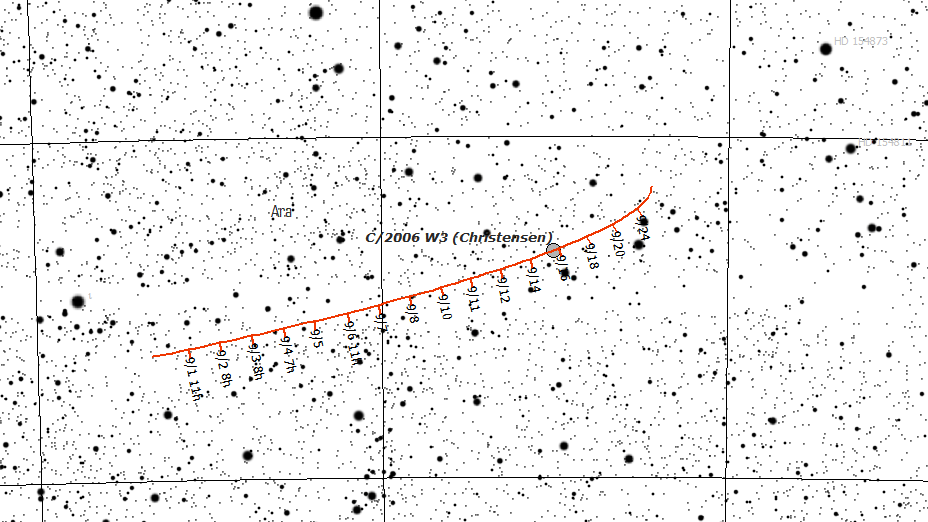
This comet was discovered over 2 years ago on 2006 November 18 by Eric Christensen of the Catalina Sky Survey north of Tucson. At the time the comet was located at 8.7 AU from the Sun which is nearly the distance of Saturn. The comet will reach perihelion at a still rather distant 3.12 AU from the Sun on 2009 July 6. At that time, the comet will be 8th magnitude and visible in many smaller backyard telescopes and even binoculars from dark sites. Christensen should remain bright enough to see in modest sized backyard telescopes for all of 2009.

This image was taken the night of June 26th at around midnight. A finder chart through July 1st can be found here.

Thanks to the great website, Transient Sky, for the majority of this information.

Tuesday, May 12, 2009

Space Station From My Back Yard


One of the many great things about amateur astronomy is the countless number of things one can do. From simply lying on your back and gazing at the stars to measuring the flux from a cataclysmic variable star. My main interest is comets (for now), but I will often do something completely different. Especially after several nights of frustration in other projects.

I recently got the bug to try and photograph the International Space Station with my modest equipment. (After several nights of frustration in another project!!! :/)

The image above is the result after only my 3rd attempt. The first try gave me nothing but streaks of light across a few frames. The 2nd was better with a lot of frames showing something very over-exposed. This attempt was, to me, a complete success!

This may, and often does, seem like nothing at all to many people. You can't really see much detail. Some say, "Why is it so blurry?" Sure, it's no Astronomy Picture Of the Day, and it may not impress a single soul. But the satisfaction that this gives me is indescribable. Even a blurry, faint, unimpressive picture like this took more planning, study and patience than most people would ever believe. And seeing these images come up on my screen, knowing that these were taken FROM MY BACK YARD, is just so incredible. Now I can go back to my previous project, confident in my eventual success.

- How I did it -

Contrary to what I wrote above, this was fairly easy. The space station is now very bright and easy to find if you know where to look. The camera was a simple web cam, but with an adapter to mate it to the eyepiece holder of my telescope. Those can even be made easily with an old film canister. Probably the hardest part, aside from setting the camera's controls correctly, was following the space station as it passed over. I just looked through the finder scope and tried my best to keep it centered on the cross hairs. Of over 1600 frames, only 58 had the ISS in it! But that was enough to process with Registax to create the final image.